
May 2026
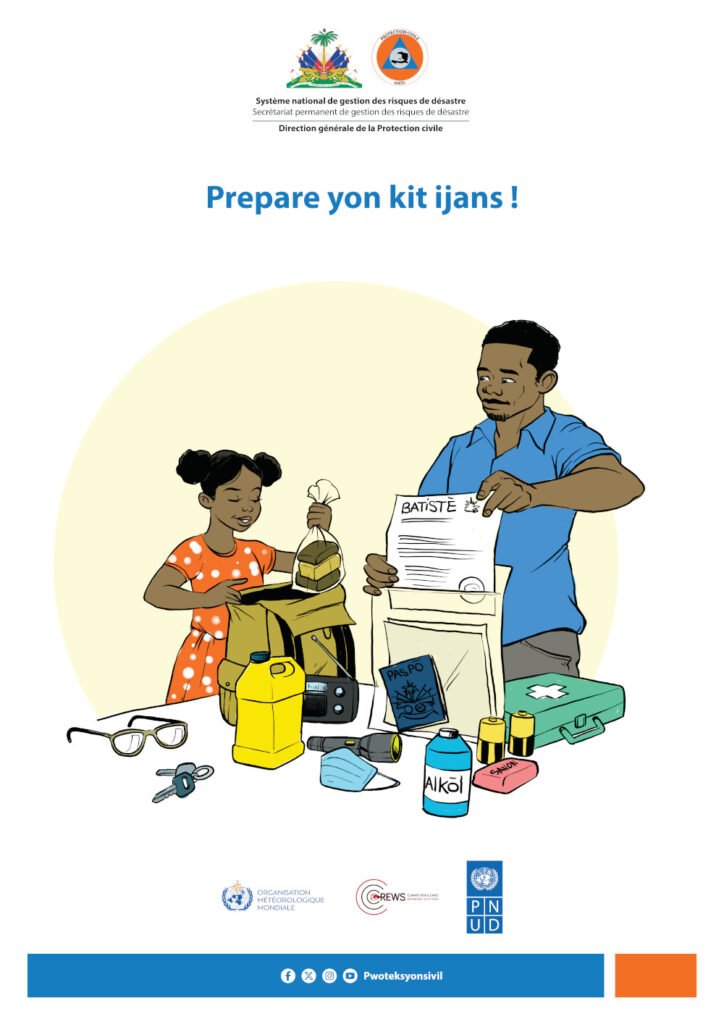
Haiti is one of the most disaster‑vulnerable countries in the world, facing recurring earthquakes, floods, hurricanes and landslides. Even minor rainfall can trigger severe impacts, including loss of electricity, drinking water and access to hospitals. Against this backdrop, the CREWS‑Haiti project—funded by the global Climate Risk and Early Warning Systems (CREWS) initiative—supported the development of a novel visual communication campaign to raise awareness of hydrometeorological risks, particularly among young people.
The initiative focused on producing illustrated educational panels for use by Haiti’s Civil Protection Communication Department. Visual communication was chosen because Haiti has a large youth population and a national literacy rate of around 61%, significantly below the regional average. According to project focal point Jhon Kely, the broader CREWS‑Haiti programme aims to strengthen the technical and operational capacities of the Haitian Hydrometeorological Unit (UHM), improve forecasting quality, enhance disaster preparedness, and raise awareness of major risks nationwide.
The illustrated panels build on earlier DGPC (Directorate General of Civil Protection) experience using visual and audiovisual materials to teach children about seismic hazards. With UNDP support, previous seismic‑risk exhibitions had already been adapted into portable, equipment‑free panels. The new hydrometeorological collection extends this approach, using expressive illustrations, short texts and humour to engage young audiences.
The panels form part of a wider communication toolkit that includes radio, theatre, flyers, maps, websites and signage at risk sites. Their use has expanded since the 2010 earthquake and subsequent hurricanes, becoming a core component of community‑level risk‑awareness efforts.
UNDP defined four objectives for the project: raising awareness among students, teachers and the wider population; highlighting the role of young people in disaster risk management; promoting life‑saving actions through visual and practical demonstrations; and strengthening community brigades as intermediaries in awareness campaigns. According to Mr Kely, these objectives were achieved through classroom sessions, mass awareness activities during school recess, and the revitalisation of community brigades. Simulation exercises confirmed improved preparedness and “good reflexes” among local populations.
The project team identified areas for improvement, including the need for a mini‑guide to help Civil Protection volunteers use the panels effectively. A draft guide now exists, and future iterations could integrate this material into volunteer training courses and involve school communities more directly in facilitation.
Challenges remain. Communicating risks without media support requires trained personnel at the local level, but shortages of qualified agents slow implementation and increase costs. In some cases, staff must be mobilised from departmental or central levels. Strengthening local capacity is therefore essential.
Despite these constraints, the illustrated panels proved highly effective, especially with younger audiences. More than 10,000 students were reached directly, alongside large numbers of community members. While the target audience was successfully engaged, Mr Kely notes that more systematic evaluation—such as measuring students’ ability to identify cyclone hazards or assemble emergency kits—would improve accuracy in assessing impact.
Overall, the project demonstrates how visual communication, when combined with community engagement and institutional support, can significantly strengthen disaster‑risk awareness in a highly vulnerable context.

0 Comments